
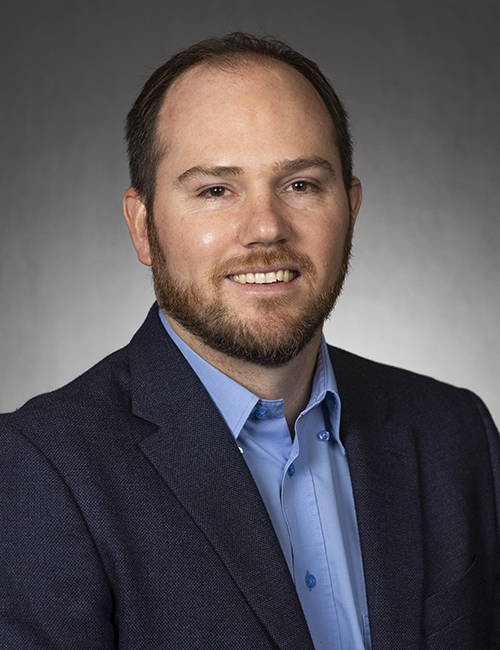
Dr. Ian M. Small
Associate Professor
Plant Pathology
The goal of my integrated research and extension program is to improve our understanding of plant diseases and reduce their impact on food, feed, fiber and bioenergy crops in Florida. More specifically, my primary areas of interest within plant pathology are epidemiology, integrated disease management, smart crop protection, and plant breeding for disease resistance. I work closely with agronomists, plant breeders, and other scientists to evaluate genetic, cultural, biological, and chemical disease control strategies as components of integrated crop management of field crops such as peanut, cotton, and bioenergy feedstock crops. I also collaborate with computer scientists and agricultural engineers to develop and evaluate technologies such as decision support systems and phenotyping tools.
Please see my Research and Extension sections for more information.
Programs
-
Research
Dr Small’s research program is structured around three themes:
- Integrated disease management. Systems approaches to the management of plant diseases. Our group’s goal is to integrate genetic, cultural, biological, and chemical control methods into practical strategies for effective, economical, safe, and sustainable disease management. Two key programs under this theme are the sod-based rotation system and the UF Carinata program.
- Plant disease epidemiology. Characterization of host – pathogen – environment interactions in order to improve our understanding of factors influencing disease progress. To develop predictive systems for plant diseases it is necessary to accurately and reproducibly assess the spatial distribution and severity of plant diseases. Through collaboration with remote sensing and computer science experts, my program’s current research applies remote sensing, image analysis and machine learning techniques to improve quantitative assessment of disease progress. Accurate quantitative assessment of disease progress combined with environmental data, such as soil mapping data, weather data and data from in-field sensors (envirotyping) will facilitate the development of plant disease models.
- Smart crop protection and phenotyping. Development of algorithms and decision tools to improve risk assessment and management of plant diseases affecting food, fiber, and bioenergy production. Our goal is to explore opportunities to utilize technology to improve the economic and environmental sustainability of cropping systems. We are also working on field-based phenotyping (UAS and ground-based) to enable accurate and reproducible assessment of traits and symptoms over space and time. We apply these technologies within our other programs, such as the sod-based rotation system and carinata program.
- Integrated disease management. Systems approaches to the management of plant diseases. Our group’s goal is to integrate genetic, cultural, biological, and chemical control methods into practical strategies for effective, economical, safe, and sustainable disease management. Two key programs under this theme are the sod-based rotation system and the UF Carinata program.
-
Extension
Dr Small’s extension program strives to address stakeholder needs by creating, evaluating, and disseminating solutions to plant diseases affecting field crops such as peanut, cotton, carinata, and soybeans. Our efforts target the following aspects of UF IFAS Extension high priority initiatives:
- Increasing the environmental sustainability, profitability, and competitiveness of agricultural enterprises
- Enhancing and protecting water quality, quantity, and supply by optimizing the use of water resources without compromising crop health
- Enhancing and conserving Florida’s natural resources and environmental quality by creating tools to optimize the use of agricultural inputs
- Producing and conserving traditional and alternative forms of energy by supporting the development of a carinata-based bio-economy in the southeast US and by optimizing the use of agricultural inputs.
- Outreach to develop knowledge, life skills, and leadership abilities in Florida’s youth, particularly in the areas of science, technology, engineering and math.
- Strengthening urban and rural community resources and economic development through the support of start-up businesses in the area of ag tech.
We use applied research to evaluate technologies and strategies to improve the management of plant diseases. We work closely with extension faculty, crop advisors, agribusinesses, and commodity groups to improve the management of the diseases affecting field crops in the humid sub-tropical climate of North Florida.
- Increasing the environmental sustainability, profitability, and competitiveness of agricultural enterprises
Contact
Dr. Ian M. Small
Associate Professor
Plant Pathology
North Florida Research and Education Center
155 Research Rd.
Quincy, FL 32351
Phone: 850-875-7120
Fax: 352-846-6617
Email
-
Education
- Ph.D. Plant Pathology & Plant-Microbe Biology, Cornell University - 2016
- M.S. Plant Pathology, Stellenbosch University - 2010
- B.Sc. Agricultural Science (Plant Pathology and Agronomy), Stellenbosch University – 2007
- Publications
-
Lab Group (Current & Alumni)
Current Member(s):
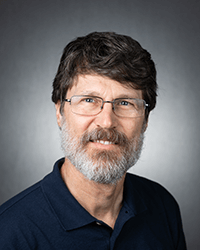
George O’Brien (Kelly)
Biological Scientist
Email: obriengk@ufl.eduKelly holds a BS in agronomy from The Ohio State University. He has worked in agronomic and biological research in field, greenhouse, and laboratory studies for more than 25 years. He is principally responsible for conducting investigations related to several important plant diseases on a variety of field crops including peanuts, soybeans, cotton, corn, and carinata .This is both from a disease management perspective as well as for developing high throughput phenotyping technology.
 Rebecca BaroccoBiological ScientistEmail: rbarocco@ufl.eduRebecca is originally from Northwest Arkansas. She received a BS degree in Horticulture at the University of Arkansas in Fayetteville and a Doctor of Plant Medicine degree at the University of Florida in Gainesville. She has supported this program for over 8 years in field research on the epidemiology and integrated disease management of peanut, cotton, and carinata and has expertise in applied remote sensing with drone imagery. She is currently pursuing a PhD in plant pathology on disease modeling and how cover crops affect the pathogens and the epidemiology of peanut leaf spot diseases.
 Dr. Abinaya InbamaniPost Doctoral AssociateEmail:inbamani.abinaya@ufl.eduAbinaya Inbamani holds a Ph.D. in Electrical Engineering specializing in the application of machine learning and IoT for renewable energy and smart systems. She integrates Embedded systems, Artificial Intelligence, and data-driven approaches to develop efficient and sustainable technological solutions. She has extensive experience as an educator, mentor, and technical expert, guiding students and professionals in STEM, innovation, and applied research. Currently, she contributes to AgTech education and research, focusing on applying AI and emerging technologies to solve real-world agricultural challenges.
 Arika CareyGraduate StudentEmail: arikacarey@ufl.eduArika has a multidisciplinary background, holding a BA in Sociology and Spanish and an MS in Business Management from the University of Florida. In 2023, she completed a Product Business Management internship with Driscoll’s in Watsonville, CA, followed by a 2024 internship with Gallo’s Grower Relations team in the Finger Lakes region of New York. While interested in all dimensions of the food and fiber system, she is most devoted to promoting crop health and advancing environmentally and economically sustainable crop production. Her current work is focused on the development and adoption of disease risk assessment models, decision support systems, and other technologies to improve the management of fungal diseases affecting specialty and row crops.
 Sudeep AdhikariGraduate StudentEmail: sudeep.adhikar@ufl.eduSudeep Adhikari is a Ph.D. student in the Plant Breeding Program. His research focuses on improving resistance to whiteflies and whitefly-transmitted viruses in cucurbits, integrating field-based evaluations, genomics, and computer vision-based phenotyping to enhance breeding efficiency. He has a background in plant pathology, with experience in plant virus detection, diagnostics, and molecular characterization.Alumni:
- Santosh Sanjel
- Matthew Burger
- Theodor Stansly
- Zihuan (Tony) Teng
- Joseph Iboyi
- Eeusha Nafi
- Shivendra Kumar
- Ramdeo Seepaul
- James Clohessy
Vacant Position
RSA - Agronomic Crops